
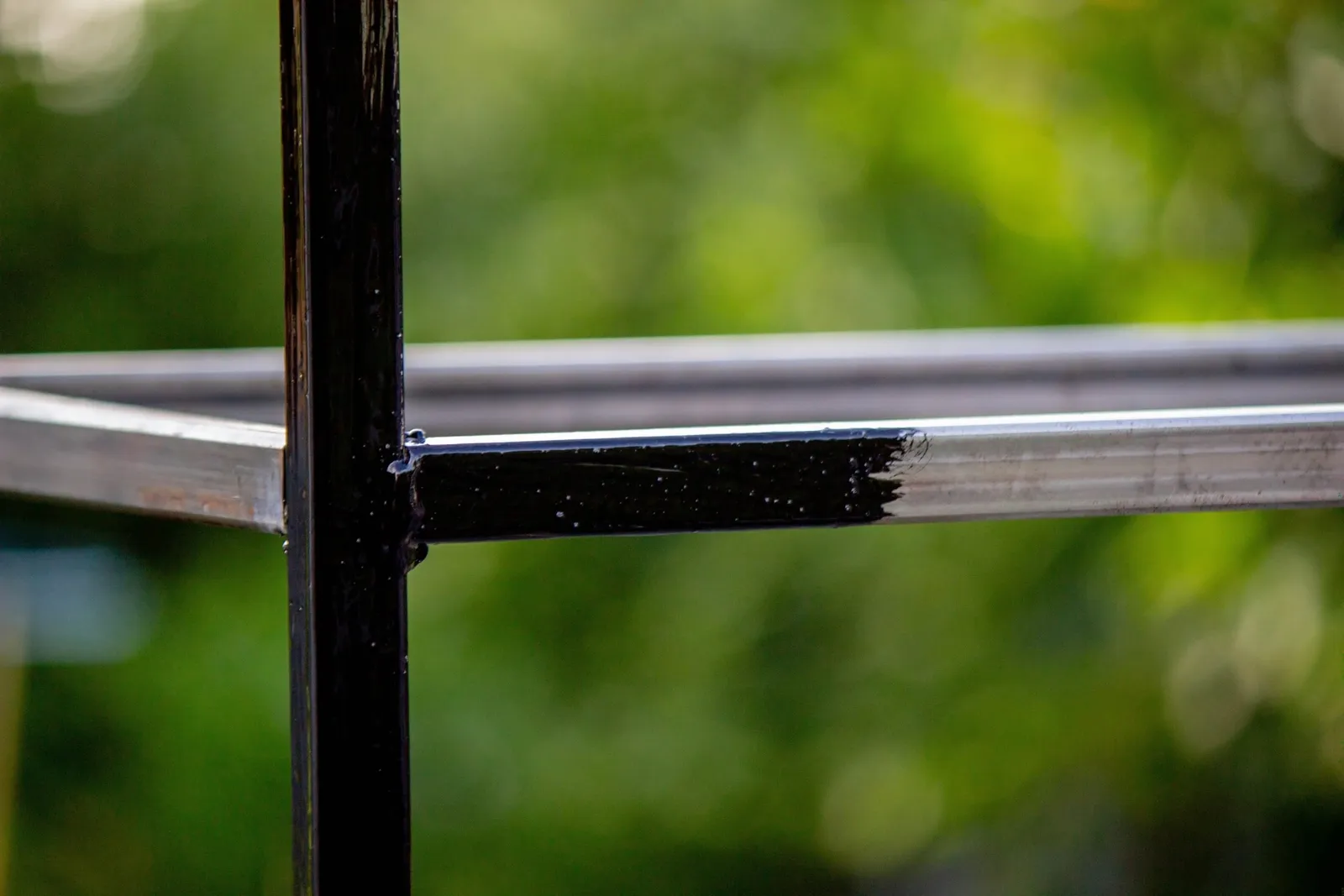
What steel really offers thermally
Steel, aluminium, timber: compared on thermal performance, visible section, price and lifespan — choosing the frame and glazing for your conservatory.
Steel, aluminium, timber compared
Ask the workshop →Steel, our workshop's material, doesn't naturally insulate better than aluminium — both are good heat conductors and need a thermal break (an insulating insert that interrupts the metal) to limit heat loss and condensation in a heated room. Timber stays the best natural insulator, at the cost of regular upkeep.
| Material | Thermal insulation | Visible section | Lifespan |
|---|---|---|---|
| Steel, no thermal break | Poor — good conductor, frequent thermal bridges and condensation | Very slim | Very long (anti-corrosion treatment needs upkeep) |
| Steel, thermally broken | Good — insulating insert interrupts the metal (e.g. Uw 1.1 W/m².K on a reference profile) | Slim | Very long (anti-corrosion treatment needs upkeep) |
| Aluminium, no thermal break | Poor — not recommended by professionals for a heated room | Slim | Long, low maintenance |
| Aluminium, thermally broken | Good — the configuration professionals recommend | Slim | Long, low maintenance |
| Timber | Very good naturally — the best insulator of the group | Thicker | Depends on regular upkeep (paint, varnish) |
What shapes the choice
Three criteria that guide the glazing
Real thermal comfort
A heated conservatory used year-round justifies insulating double glazing and thermally broken profiles — single glazing, even on a handsome frame, means a cold room in winter and an overheated one in summer.
Learn moreThe roof shape
A curved roof (Victorian style) often needs shaped panels rather than standard flat sheets, which limits the available choice and affects price.
See the Victorian conservatoryHow dense the grid is
A studio style with fine glazing bars multiplies glazing junctions — and so potential thermal bridges — compared with one large contemporary-style panel.
See the studio style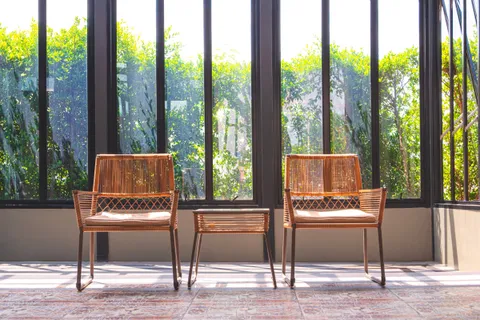
Glazing and structure,
designed together
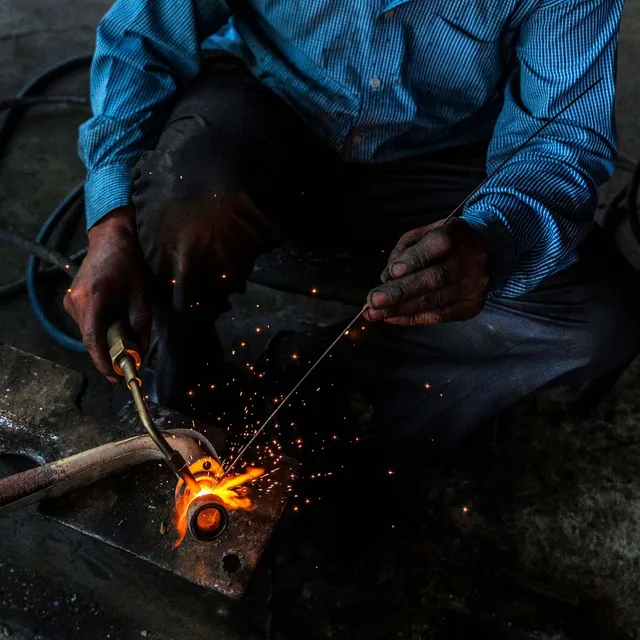
Ironwork workshop · France
Metal framing, not just the glass
Choosing the glazing goes hand in hand with choosing the steel profiles that hold it: their thickness, spacing and whether they're thermally broken all shape the structure's strength, how much light reaches the conservatory, and its real winter performance.
Describe the style you're after (Victorian, studio) and your priorities (budget, insulation, light): the workshop points you to the most suitable configuration before any commitment.
Get a quoteFrequently asked questions
Is steel a poor choice for a heated conservatory?
No, as long as thermally broken profiles are used — bare steel insulates poorly, but with a thermal break it can match equivalent aluminium while keeping slimmer sections.
Does timber still outperform thermally broken steel?
Timber keeps a slight natural edge, but at the cost of regular upkeep (paint, varnish) that treated steel doesn't need — a trade-off based on your priorities, not a universal rule.
Is glazing included in the structure's listed price?
No, the glazing and profile type you choose is costed separately — see our pricing page for the detail by configuration.
Direct workshop contact
Get a free quote
Interested in a specific glazing or insulation setup? Describe your project, the workshop advises you within 48h.
Free quote